
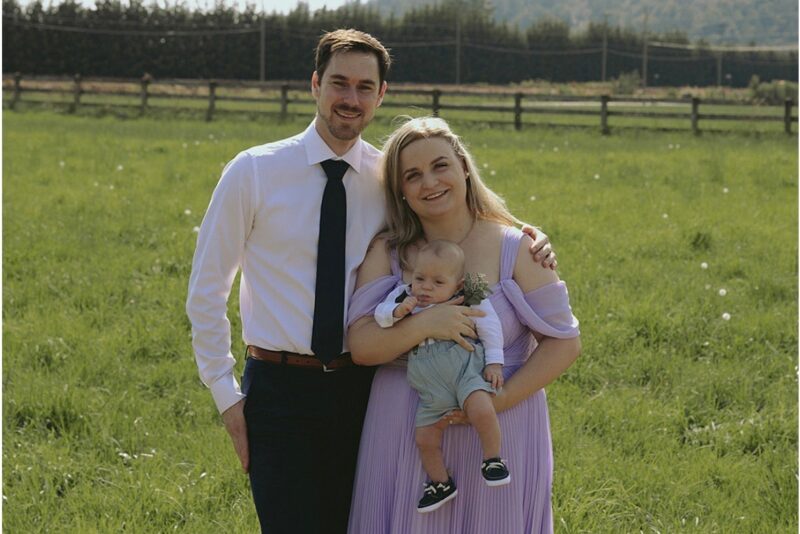
“I was told that I was in labour. And I was so shocked,” she recalls. “A moment of joy that was taken away from me because a lot of women probably hear you’re in labour and you’re kind of like, ‘Oh, nice. I’ll get to meet my baby soon.’ And whereas with me, it was kind of like, oh no, he might not live.”
Lauren, a recreation manager from Chilliwack, was 25 weeks pregnant when she unexpectedly went into labour 3.5 months early. With the seriousness of the situation clear, she was airlifted to Royal Columbian Hospital, where her son, Daniel, would be born. Weighing just over a pound, Daniel was admitted to the Neonatal Intensive Care Unit, beginning an 83-day stay that would test Lauren and her family in ways they could not have anticipated.
As she prepared for the helicopter transfer, Lauren remembers focusing on the one thing she felt she could control.
“I remember thinking, okay, I need to be very calm right now because I have no control over this situation, and that is the only thing that I can do to make sure that my baby has the best chance of surviving,” she says.
Babies born that early require highly specialized and constant care. For Lauren, seeing her newborn surrounded by equipment was overwhelming, but the NICU team worked closely with her and her husband from the very beginning.

Daniel Niezen receiving care in the Royal Columbian Hospital Variety Neonatal Intensive Care Unit (NICU).
“For a micropreemie like Daniel, the NICU journey is long and filled with ups and downs,” says Nicole Cusick, a Registered Nurse in the Royal Columbian NICU department. “From the moment a baby is born, our team partners closely with families, recognizing how overwhelming it can feel to see their baby surrounded by equipment.”
Once Daniel was stabilized, the care team made early bonding a priority. Shortly after his birth, Lauren was able to have skin-to-skin contact with her son before he was transferred to the NICU.
“Facilitating these early moments helps support families as they transition into the journey ahead,” Nicole explains.
Because the family lived outside the Lower Mainland, staying close to the hospital quickly became a challenge. Support from Royal Columbian Hospital Foundation helped make it possible for Lauren and her husband to remain near the hospital through a Foundation funded hotel stay. This support allowed them to spend long hours each day at Daniel’s bedside, something Lauren believes made a meaningful difference in his recovery.
“The more the parents are able to visit their kids in the NICU, the higher chance of success they have,” Lauren says. “And so Daniel’s NICU stay, we were able to visit him 16 hours a day.”
That constant presence became central to how Lauren and her husband coped with the uncertainty of the weeks ahead. As Daniel slowly grew stronger, the fear that had defined those early days began to shift.
“It went from we’re scared that he’s going to die to, he’s going to be okay, he’s going to get through this, we just need to be able to support him to do that,” she says. “And the foundation absolutely helped us do that.”
Throughout Daniel’s stay, Lauren credits the NICU staff for creating a sense of inclusion and trust. Nurses and physicians took time to explain complex information, invited parents to participate in rounds, and celebrated milestones along the way.
“Family centred care in the NICU means ensuring families are not only informed but truly involved in their baby’s care and the decisions being made,” says Nicole. “For me, it’s about promoting bonding and a sense of normalcy in a highly medicalized environment.”
She remembers moments like helping Lauren give Daniel his first bath, small but powerful experiences that helped the family feel connected.
“Knowing Daniel’s family felt supported and listened to is incredibly affirming as a nurse,” Nicole says. “It’s a reminder that the care we provide each day leaves a lasting impact well beyond the NICU stay.”
After 83 days in the hospital, Daniel was finally able to go home. Today, he is healthy, meeting his developmental milestones, and thriving. For Lauren, the experience left a lasting impression and a strong desire to give back.

Daniel has made a full recovery at home, and continues to meet his developmental milestones.
Understanding firsthand how donor funded supports eased the burden on her family, Lauren started a fundraiser to support Royal Columbian Hospital Foundation and other families navigating the NICU.
“Healthcare isn’t always about what happens in the hospital,” she says. “It’s also about what happens to the people who are involved in that care as well.”
She hopes her fundraising will help ensure families can remain close to their babies during long and uncertain hospital stays, without the added stress of travel and accommodation costs.
“The strain on our marriage, on our relationships, on careers and family bonds is something I don’t really wish on anyone,” Lauren says. “It has the potential to break you or bring you closer together. And luckily for us, it brought us all closer together.”
Looking at Daniel now, Lauren reflects on how far they have come, and on the community of support that carried them through.
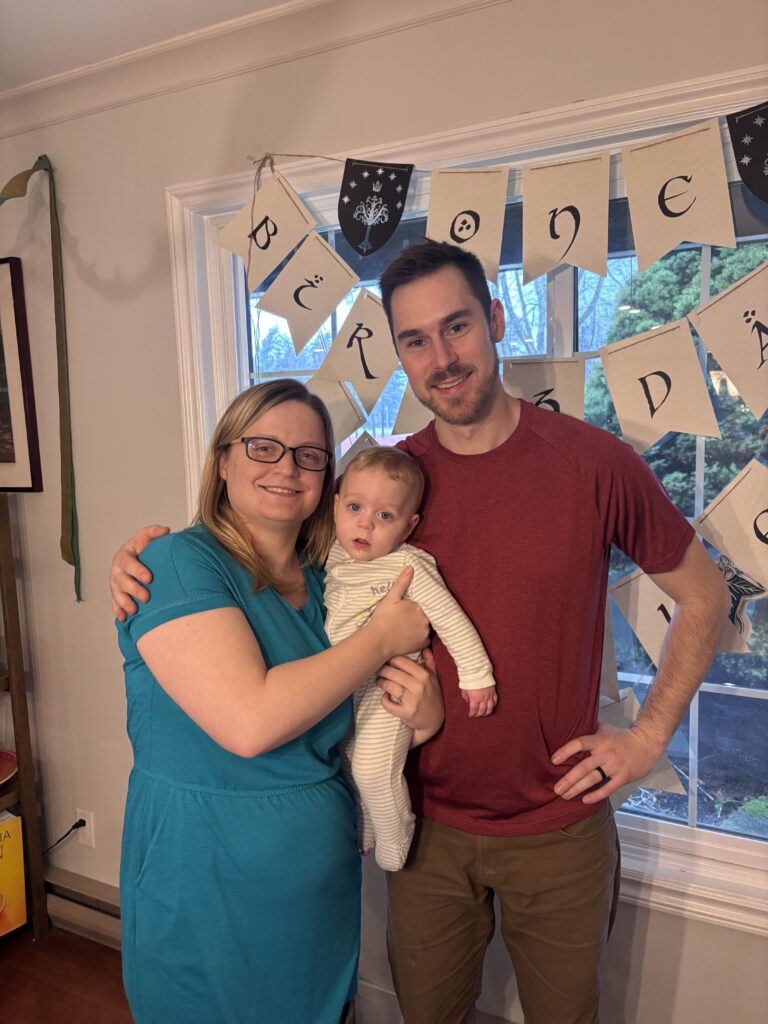
The Niezen Family celebrating Daniel’s first birthday.
“You think about the little things like he bangs his head on a toy and he starts crying,” she says. “And then you think about that made him cry, but all of these other things that he went through in the NICU, he won’t remember any of that.”
What remains is the impact of compassionate care, donor generosity, and a mother’s decision to turn gratitude into action for the families who will follow.